#getoutside
- Reagan Fulton

- Sep 20, 2021
- 4 min read
Updated: Oct 28, 2021
Last week on the blog, we talked about the benefits of getting outside and how I came to understand them through my homeschooling journey. But a lot of you have a big question...HOW?
If you don't regularly spend time outside yourself, how do you encourage it in children? Do you consider yourself an "inside person?"
Don't let this scare you away. Keep reading because I think I'll have a few tips that will help you slowly grow your love for the outdoors and connect with nature in a way that feels right to you.

Here are a few steps to get outside and resources to help you get started:
1. Start small. Don't already have a routine of being outside regularly? That's okay! Start small, and you'll find yourself yearning for the outdoors more every day. Schedule blocks. Be intentional about it until it becomes natural. 20-30 minutes and work up (to a recommended hour minimum !) Take a daily walk. Plan a weekly Nature hike with friends to keep you company. Make a challenge to try all the playgrounds in your city. Whatever it is, just start.
2. Have the right gear. Bug spray. Sunscreen. Jackets. Proper shoes. Ect. You have more fun when dressed for the weather. Winter =/= inside. It's much easier to bundle up when it's cold than to cool off when it's too hot, so take advantage of the winter months and soak up the vitamin D! Subscribe for updates to get my upcoming blog post with specific recommendations and the Supply List I use for my school!
3. Mindfulness in nature. One of my favorite resources for mindfulness, both AS a nanny/caregiver and for our kiddos, is The Mindful Nanny Collective. If you haven't connected with Alexaraye and her team over at MNC, you need to! Their resources are vast and vary from full support through their Ecourse and one on one coaching to free resources for caregivers. Starting your day with intent. Connecting with nature in whatever way fuels your soul. Start a Garden or get some house plants if you cannot have one outside. Stop spraying your yard and allow pollinators to thrive and bring more biodiversity. Learn native plants in your area and plant them in your garden; see other native species quickly appear. Notice and ponder their activities. Grow something. See a plant come to life from seed. These things connect us to nature, ground us in intention, and give us the power to learn every day.
4. Read in nature. We do daily storytime outside, and I allow the children to wander. The idea that you must sit down and look to hear and process information is a neurotypical lie. I have seen so much more learning and interest when allowing children to freely explore while listening to literature. Last week, I wrote about fond memories of my mom reading to us while we climbed trees as a child, and I love giving my son that same experience.
5. Journal in Nature. I'm planning a more extensive blog post on nature journaling so stay tuned. But the basic gist is to get a journal (Can just be printer paper stapled in half into a book!) and some writing utensils, and just draw. Draw what you see or imagine, or desire while outside. I love drawing what we see and labeling, but I've also had children draw imaginary animals and tell me the story of their life.
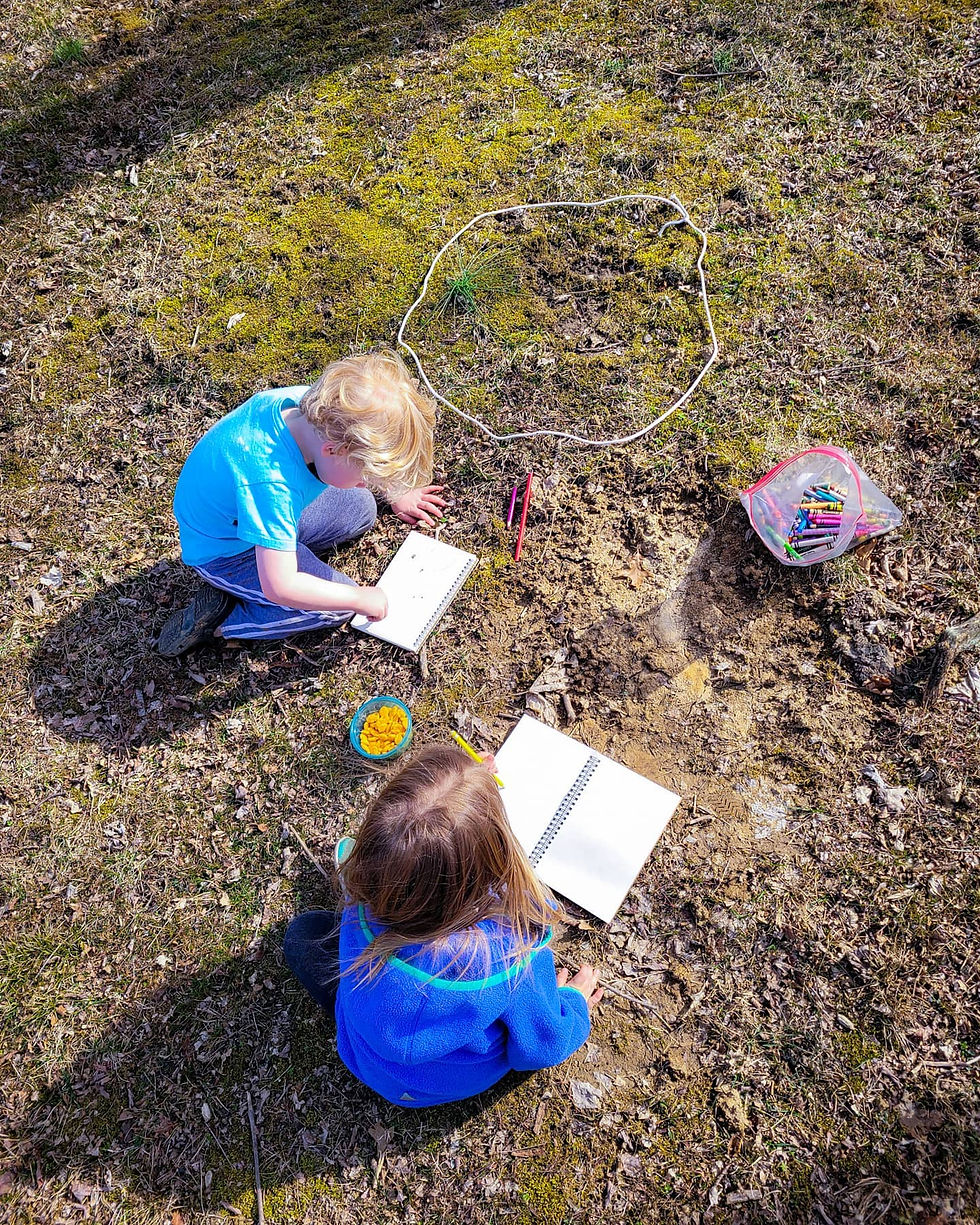
There is no end to what can be learned and explored when nature journaling.
6. Provide loose materials. Logs, rocks, mulch, dirt, PVC pipe, lumber, mud, acorns, branches, leaf piles, old kitchen pots and pans, shovels, and digging tools-- There's an endless adventure when you provide open-ended play with loose materials and let the children guide their play. I can't wait to expand on this further in a future post!
7. Curriculums and resources (that I actually use) for Learning in nature. I don't know it all! I wish I could identify every tree or have an activity up my sleeve every day from my mind, but not yet. I learn from those who have come before and use these resources in addition to original lessons and LOTS of open-ended free play:
Harbor and Sprout is, without a doubt, the most comprehensive nature-based curriculum I have found. Read my full review here.
Your local library- books books books. About whatever is happening in nature/weather and whatever interests them that week. We make weekly library trips, and I always find a few myself or from our booklist, but ALWAYS allow the children to pick out one or two books THEY find that they WANT to read.
My last tip, but certainly not the least, is this.
Give yourself grace. There are days I don't go outside. Generally, I don't generally feel my best those days. But don't beat yourself up. If you allow yourself to guilt yourself because your charges didn't get their 60 minutes of outside time that day, you will grow to resent it. The beauty of nature play is in the ease and connection it brings to our most peaceful and happy selves. So don't allow it to become a chore, rather a practice done out of desire.
So don't forget to #getoutside and use these tips to help you connect with nature and build your love and desire for the outdoors.
Cincinnati (and non-Cincinnati) Families and Caregivers, I am happy to announce a new resource to connect and learn more about nature play, how to connect, events going on around town, and building a community of likeminded individuals who want to teach their children in nature and support one another in raising the next generation of conservationists, zoologist, artists, authors, and creatives. Head here to join today!
Use the hashtag #getoutsidecincinnati and #getoutside and tag @playfulacre on Instagram and show us how you get outside this week and every week!


Comments